

Ontario’s P.Eng. Salary Insights
What Influences P.Eng. Salaries in Ontario?
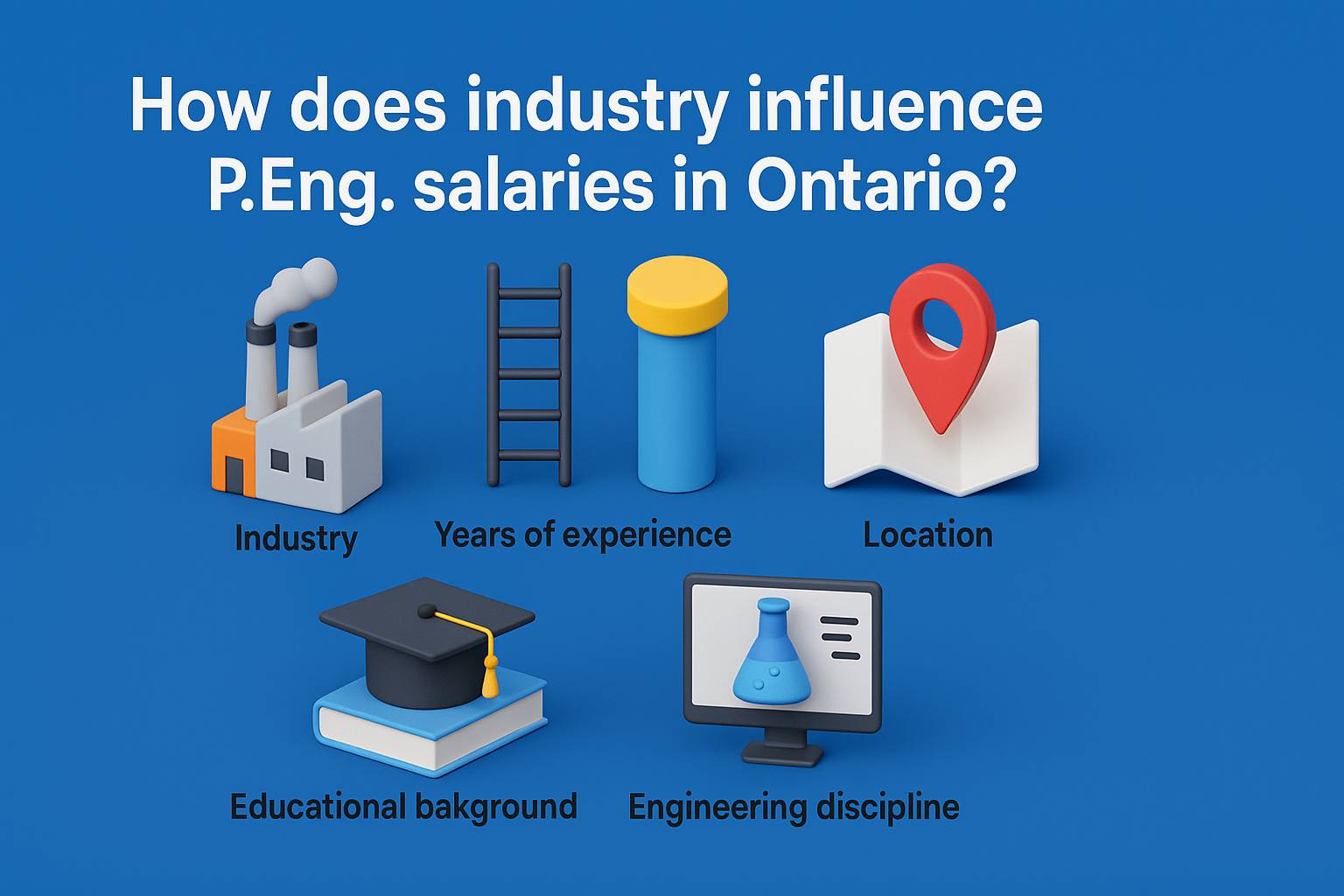
A variety of factors influence P.Eng. salaries in Ontario. The extent of work experience, industry type, geographical location, and educational background significantly affect salary levels. Additionally, the specific engineering discipline and prevailing economic trends play crucial roles in shaping compensation rates.
How does industry influence P.Eng. salaries in Ontario?
Industries have unique compensation structures, meaning P.Eng. salaries can vary widely based on the sector. For instance, professionals in the oil and gas industry often earn higher salaries compared to those in academia. According to the Engineering Career Forum, sectors like manufacturing and technology also offer competitive pay due to high demand for engineers in these fields.
For further insights on the topic and to explore specific industry salary trends, you might find the blog on Finding Engineering Jobs in Canada helpful.
What impact do years of experience have on P.Eng. salaries?
Salaries typically increase with experience, as seasoned engineers bring valuable skills and knowledge to their roles. More experienced engineers often see salary boosts as they assume positions of greater responsibility and expertise. For instance, an engineer with over 15 years in the industry often commands a higher salary than a peer with less experience.
If you’re interested in understanding the career progression of engineers, explore our guide on the EIT to P.Eng. Journey in Canada.
How does location affect P.Eng. salaries in Ontario?
Location is a critical determinant, with salaries often reflecting the cost of living and local demand for engineers. Engineers working in urban centers like Toronto might earn more than those stationed in smaller towns. Nevertheless, this might be offset by higher living costs in larger cities.
Analyzing regional economic data provided by the Kingsview Partners can offer deeper insights into how location impacts salaries.
Why does educational background matter for P.Eng. salaries?
The level and prestige of one’s educational background can significantly impact their earning potential. Graduates from top-tier engineering programs may receive higher starting salaries, reflecting their advanced training and potential for innovation.
For guidance on how to leverage your education in seeking licensure, check out our site for case studies on successful P.Eng. applicants.
What is the role of engineering disciplines and economic trends on salary variations?
Different engineering disciplines have varying pay scales. For example, chemical engineers might see different salary trends compared to civil engineers. Economic trends also influence these variations. A boom in tech startups could lead to higher salaries for software engineers due to increased demand.
To stay up-to-date on discipline-specific salary data, the PayScale website is a handy resource.
Understanding these factors can help you navigate the complexities of professional engineering salaries in Ontario. For further resources and career guidance, feel free to explore our services. Dive deeper into the process of becoming a licensed engineer with our detailed guide.
Average Salary Ranges for P.Eng. Across Industries
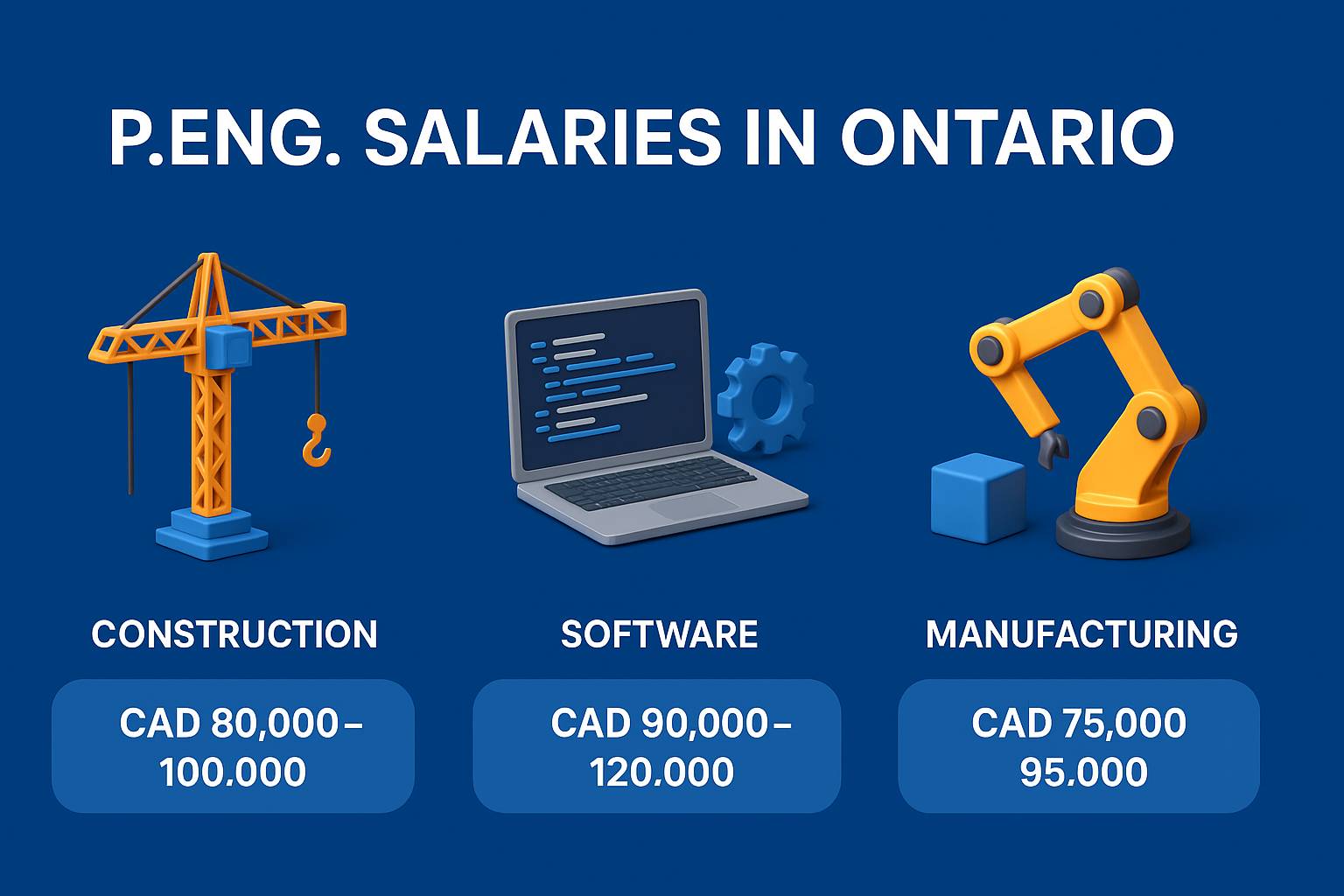
P.Eng. salaries in Ontario vary significantly across different industries like construction, software, and manufacturing. For instance, the average salary range for Professional Engineers (P.Eng.) in construction typically falls between CAD 80,000 to CAD 100,000 annually. In contrast, software engineers might earn between CAD 90,000 to CAD 120,000, while manufacturing engineers may see salaries ranging from CAD 75,000 to CAD 95,000. These figures reflect data sourced from engineering regulatory bodies and industry studies, highlighting distinct sectorial trends and salary disparities.
What are the average salary ranges for P.Eng. in the construction industry?
The construction industry in Ontario offers competitive salaries for P.Eng. professionals, generally ranging from CAD 80,000 to CAD 100,000 annually. This salary range can be attributed to the demand for skilled engineers who can oversee large-scale infrastructure projects and ensure compliance with building codes. A report by Engineers Canada supports these figures, showing that construction engineering is one of the robust engineering disciplines due to the continuous growth in infrastructure development.
How do P.Eng. salaries differ in the software sector?
In the software industry, P.Eng. salaries are notably higher, often ranging from CAD 90,000 to CAD 120,000 annually. This industry commands higher salaries due to the specialized skills and constant innovation required. According to surveys by engineering firms, software engineers with a P.Eng. designation often lead complex projects that necessitate advanced technical expertise, thereby justifying the premium salaries. For those interested in exploring these opportunities, resources on finding engineering jobs in Canada can be beneficial.
What is the salary range for P.Eng. in manufacturing?
Manufacturing engineers in Ontario with a P.Eng. designation generally earn between CAD 75,000 to CAD 95,000 annually. This range mirrors the industry’s reliance on process optimization and efficiency improvements, which are critical for a successful operation. Industry surveys indicate that although the manufacturing sector may not offer the highest salaries compared to others, the demand for P.Eng. professionals remains consistent, especially in advanced manufacturing roles. Further details on salary trends can be found through resources on engineering salary insights across Canada.
For engineers considering a shift or entry into these industries, understanding the salary expectations is pivotal. At CertNova, we provide comprehensive solutions like CBA Pro to help engineers streamline their journey to licensure and potentially enhance their earning potential. Learn more about the tools and support available at CertNova Software Solutions.
How to Maximize Your P.Eng. Earnings
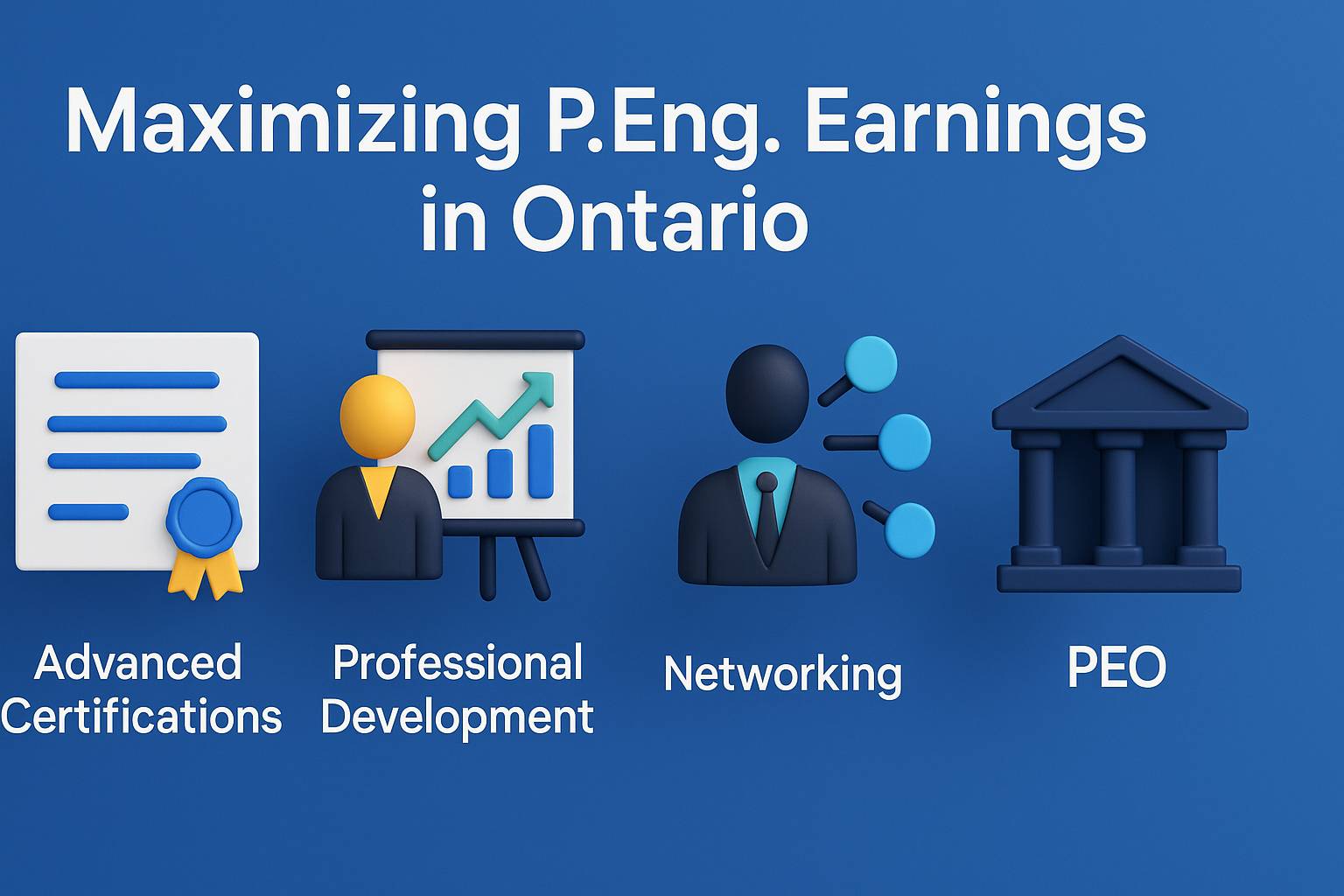
To maximize your P.Eng. earnings in Ontario, focus on acquiring advanced certifications, engaging in continuous professional development, and actively networking. By investing in these areas, you can significantly enhance your earning potential and career satisfaction.
What are the benefits of advanced certifications for P.Eng. professionals in Ontario?
Advanced certifications can significantly enhance your P.Eng. earnings in Ontario by showcasing specialized expertise and commitment to professional growth. These certifications often result in higher salary offers.
Obtaining certifications such as Project Management Professional (PMP) or Lean Six Sigma can differentiate you from your peers. These credentials signify your ability to manage projects efficiently or optimize processes, which employers highly value.
Advanced certifications also position you as a leader in your field, increasing opportunities for promotions and roles with greater responsibilities, thus leading to increased earnings.
How can professional development enhance a P.Eng. professional’s earnings?
Engaging in continuous professional development opens avenues for career advancement and higher salary brackets. Staying updated with industry trends and skills is crucial in maintaining a competitive edge.
A commitment to learning can involve attending workshops, conferences, or enrolling in courses relevant to your field. This can improve your performance and increase your value to employers.
Professional development also prepares you to tackle complex engineering challenges, making you a valuable asset to any organization and justifying a higher paycheck.
What role does networking play in maximizing P.Eng. earnings?
Networking is integral for enhancing P.Eng. earnings in Ontario, facilitating connections with industry leaders, peers, and potential employers. These connections can lead to lucrative job opportunities.
- Join professional organizations like PEO and participate in industry events. These platforms often host events for knowledge sharing and networking.
- Building a strong LinkedIn presence and actively participating in online forums can also keep you informed about job openings and industry updates.
- Networking can provide mentorship opportunities, helping you navigate career paths efficiently and connect with influential figures who can advocate for your professional growth.
How do regulatory bodies like PEO support professional growth?
The Professional Engineers Ontario (PEO) plays a crucial role in fostering the professional development of engineers through initiatives that support continuous learning and compliance with industry standards.
PEO offers resources such as competency-based assessments and advanced regulatory guidance to ensure engineers maintain high ethical standards and technical competence.
Through mentorship programs, PEO helps young engineers pair with seasoned professionals who guide them through career advancements, ultimately increasing their earning potential.
To learn more about maximizing your potential as a P.Eng. in Ontario using these strategies, visit CertNova Software Solutions. Discover tools like CBA Pro that streamline the licensure process and help boost your career trajectory with confidence.
Final words
The P.Eng. salary in Ontario reflects the high demand and respect for engineering expertise across various industries. With factors such as specialization, experience, and economic conditions influencing earnings, engineers can expect a rewarding career. Navigating the journey to becoming a P.Eng. can lead to enhanced career opportunities and financial benefits.