

Understanding the P.Eng. Professional Practice Exam in Canada
What is the P.Eng. Professional Practice Exam?
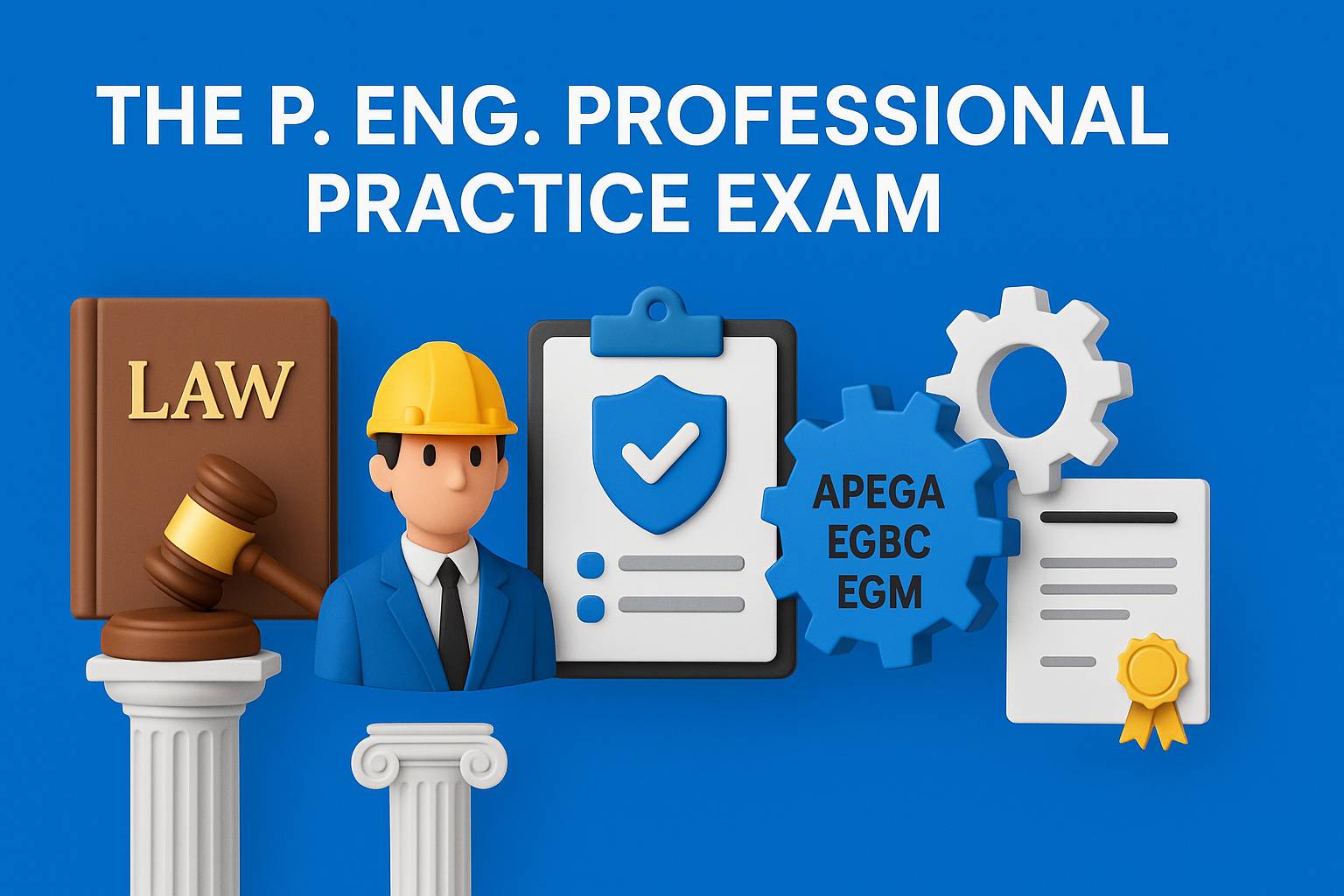
The P.Eng. Professional Practice Exam is essential for engineers in Canada aiming to obtain their professional license. This exam evaluates candidates on fundamental aspects of the engineering profession, such as ethics, law, and professionalism. It is administered by regulatory bodies like APEGA, EGBC, and EGM and is crucial for ensuring engineers meet the national standards of practice.
What does the P.Eng. Professional Practice Exam cover?
The P.Eng. Professional Practice Exam tests candidates on several core topics necessary for professional engineering practice in Canada. These include engineering law, ethics, and professionalism. Understanding law ensures engineers comply with legal standards. Ethics covers the moral guidelines that protect public safety and welfare. Professionalism assesses one’s dedication to upholding the integrity of the engineering field.
Real-world examples demonstrate its relevance. For instance, an engineer working on public infrastructure must adhere to legal regulations and ethical standards. The exam ensures candidates are prepared for such responsibilities. Thus, it’s instrumental for those pursuing licensure through the Competency-Based Assessment framework.
What role do regulatory bodies play in the exam?
Regulatory bodies like APEGA (Alberta), EGBC (British Columbia), and EGM (Manitoba) administer the P.Eng. Professional Practice Exam. These organizations ensure that exams are consistent with regional requirements while aligning with national standards. Their role is crucial in maintaining trust in the engineering profession, protecting the public’s interest and safety.
Each regulatory body ensures candidates not only excel through exams but also meet the necessary professional requirements in their respective provinces. For engineers in Manitoba, for instance, the regulatory process involves adhering to guidelines set forth by Engineers Geoscientists Manitoba (EGM).
How does the exam benefit aspiring engineers?
Passing the P.Eng. Professional Practice Exam is a crucial milestone for engineers in Canada. It signifies that the candidate has a comprehensive understanding of their professional responsibilities and is prepared to uphold the values and standards required. This leads to the prestigious P.Eng. designation, which enhances career prospects and credibility.
Aspiring engineers gain access to enhanced job opportunities and are equipped to tackle complex projects safely and ethically. Programs like CBA Pro assist candidates in aligning their competencies with industry standards, thereby easing the path to licensure.
Obtaining your P.Eng. license in Canada requires navigating through critical assessments like the P.Eng. Professional Practice Exam. For comprehensive preparation and support in your journey, explore our resources at CertNova, where we offer tools like personalized study plans and a professional community to guide you every step of the way.
How to Prepare for the P.Eng. Professional Practice Exam
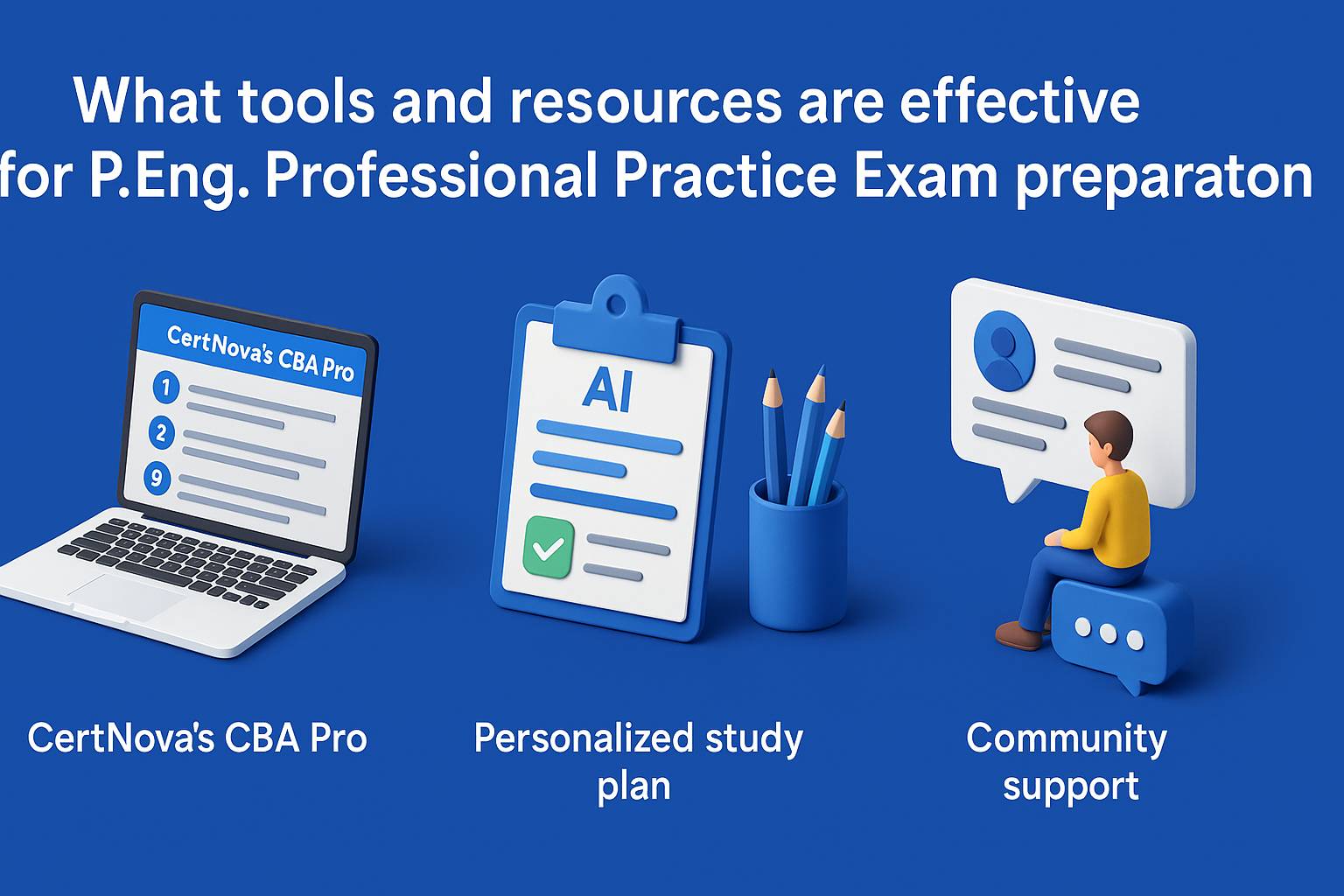
Preparing for the P.Eng. Professional Practice Exam requires understanding both the breadth and depth of competencies you’ll be tested on. Effective preparation involves leveraging tailored study resources, engaging with tools like CertNova’s CBA Pro, and tapping into community support. Exam candidates in Canada, particularly in provinces like Ontario, BC, and Alberta, will benefit from a structured approach to mastering the content.
What tools and resources are effective for P.Eng. Professional Practice Exam preparation?
To succeed in the P.Eng. Professional Practice Exam, using specialized tools and study resources is crucial. CertNova’s CBA Pro tool is specifically designed to help candidates align their competencies with exam expectations. This tool is essential for drafting comprehensive competency reports. In addition, an AI-powered NPPE Preparation Tool can create personalized study plans, adapting to your strengths and weak areas. These resources help in focusing your studies effectively, ensuring you cover all necessary topics.
For additional support, tap into online forums or reach out to peers who are also preparing for the exam. Sharing resources and tips can be invaluable in this process. Engage with communities like CertNova’s peer support network to exchange knowledge and experiences.
How does competency-based assessment play a role in preparation?
Competency-based assessments (CBA) are central to understanding the requirements of the P.Eng. Professional Practice Exam. CBA focuses on your ability to apply engineering principles practically, thus preparing effectively involves aligning your experiences with the competencies expected. Tools like CertNova’s CBA Pro are invaluable here, as they help map your experiences to these competencies clearly and efficiently.
Solidifying your understanding of the 34 engineering competencies is a good starting point. These competencies encompass technical, managerial, and ethical standards you’ll face in your professional duties. By structuring your study around these competencies, you ensure a thorough preparation.
Certification processes across Canadian provinces, including Alberta and Ontario, integrate competency-based assessments as part of their requirements. Understanding this process helps in not only passing the exam but also in knowing how to position yourself in your engineering career. More insights into these processes are available at Competency Based Assessment Canada.
Why is peer community support important?
Community support provides a collaborative environment to exchange insights and strategies for the P.Eng. exam. Networking with current P.Eng. candidates and professionals can offer unique perspectives and moral support, which is sometimes just as critical as academic preparation.
Joining forums and local engineering groups allows for exchanging tips or seeking advice on specific challenges. CertNova offers avenues for community engagement through its platform, connecting you with both peers and seasoned professionals for mentorship opportunities.
Being part of such a network not only enhances learning but also introduces you to the broader engineering community, which can provide further support during and after your certification process. Explore various services offered by CertNova that foster this communal learning approach.
For more resources and guidance on competency-based assessment and how it applies to your P.Eng. licensure in Canada, visit our comprehensive P.Eng. guide.
Why is the P.Eng. Professional Practice Exam Important?
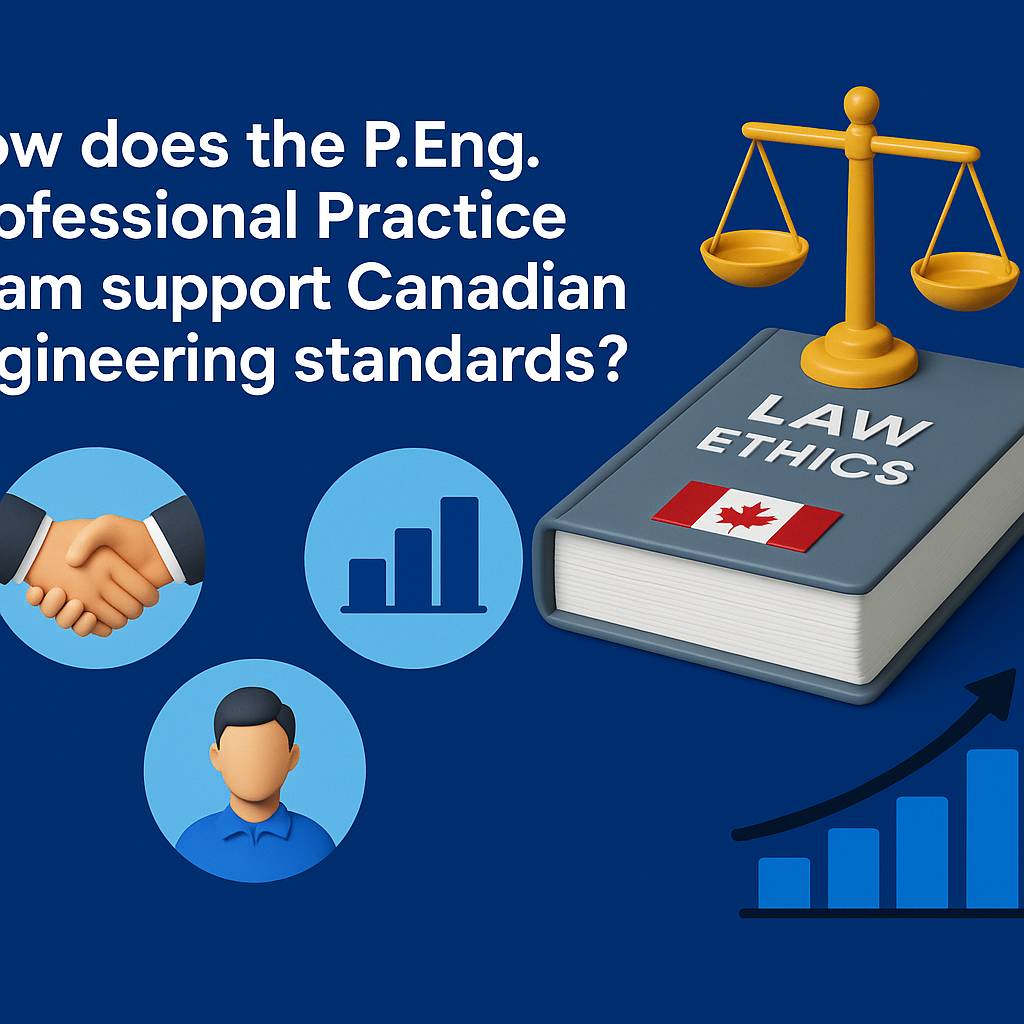
The P.Eng. Professional Practice Exam is a crucial step for engineers seeking licensure in Canada. It tests legal, ethical, and professional aspects of engineering practice, ensuring candidates are well-equipped to uphold industry standards. Successfully passing the exam demonstrates a commitment to professional integrity and can significantly impact career growth and credibility among peers.
How does the P.Eng. Professional Practice Exam support Canadian engineering standards?
The P.Eng. Professional Practice Exam is integral to maintaining the high professional standards expected within the Canadian engineering sector. The exam tests engineers on various topics, including professional ethics, law, and regulation, ensuring they are prepared to handle responsibilities legally and ethically. This requirement helps standardize the level of competency and professional behavior across provinces, including Ontario, British Columbia, and Alberta.
The exam also enforces the understanding of the P.Eng. expectations in areas such as public safety and environmental protection. By passing this exam, an engineer demonstrates their ability to meet and apply these crucial professional requirements, aligning with the national and provincial legislations established by organizations like Engineers Canada.
What role does the P.Eng. Professional Practice Exam play in career advancement?
Successfully passing the P.Eng. Professional Practice Exam is a gateway to more opportunities and responsibilities in the engineering field. It denotes a higher professional status, often required for leadership roles. When an engineer holds a P.Eng., it signals to employers and clients that they take professional responsibilities seriously.
This exam is not only a stepping stone towards higher earning potential, often reflected in factors like differences in P.Eng. salary levels, but also enhances one’s reputation within the engineering community. The P.Eng. credential thus plays a significant part in professional development, opening doors to advanced roles that contribute to more significant projects.
How does the P.Eng. Professional Practice Exam enhance credibility and trust?
The P.Eng. Professional Practice Exam builds trust with the public and employers by ensuring engineers understand their ethical and professional obligations. This exam tests knowledge crucial for making decisions that could affect public safety and welfare, which is fundamental to an engineer’s role.
In real-world scenarios, this exam ensures that engineers understand and implement the principles they are tested on, providing assurance to stakeholders of their competence and integrity. For instance, an engineer with a P.Eng. license who has passed this exam is perceived as a credible professional capable of managing both the technical and ethical demands of their projects.
The P.Eng. Professional Practice Exam is more than a test; it’s a measure of an engineer’s commitment to upholding the profession’s standards, leading to enhanced personal and career development. Interested in learning more about professional engineering in Canada? Explore our services.
Final words
The P.Eng. Professional Practice Exam is a critical milestone for aspiring professional engineers in Canada, ensuring they meet required competency standards. Understanding its structure and preparing effectively with tools like CertNova’s CBA Pro and AI NPPE tools can significantly enhance your success chances, paving the way for a rewarding engineering career.